

After partitioning, you can have Unstructured generate a list of recognized entities and their types (such as the names of organizations, products, and people) in the content, through a process known as named entity recognition (NER).
You can also have Unstructured generate a list of relationships between the entities that are recognized.
This NER is done by using models offered through various model providers.
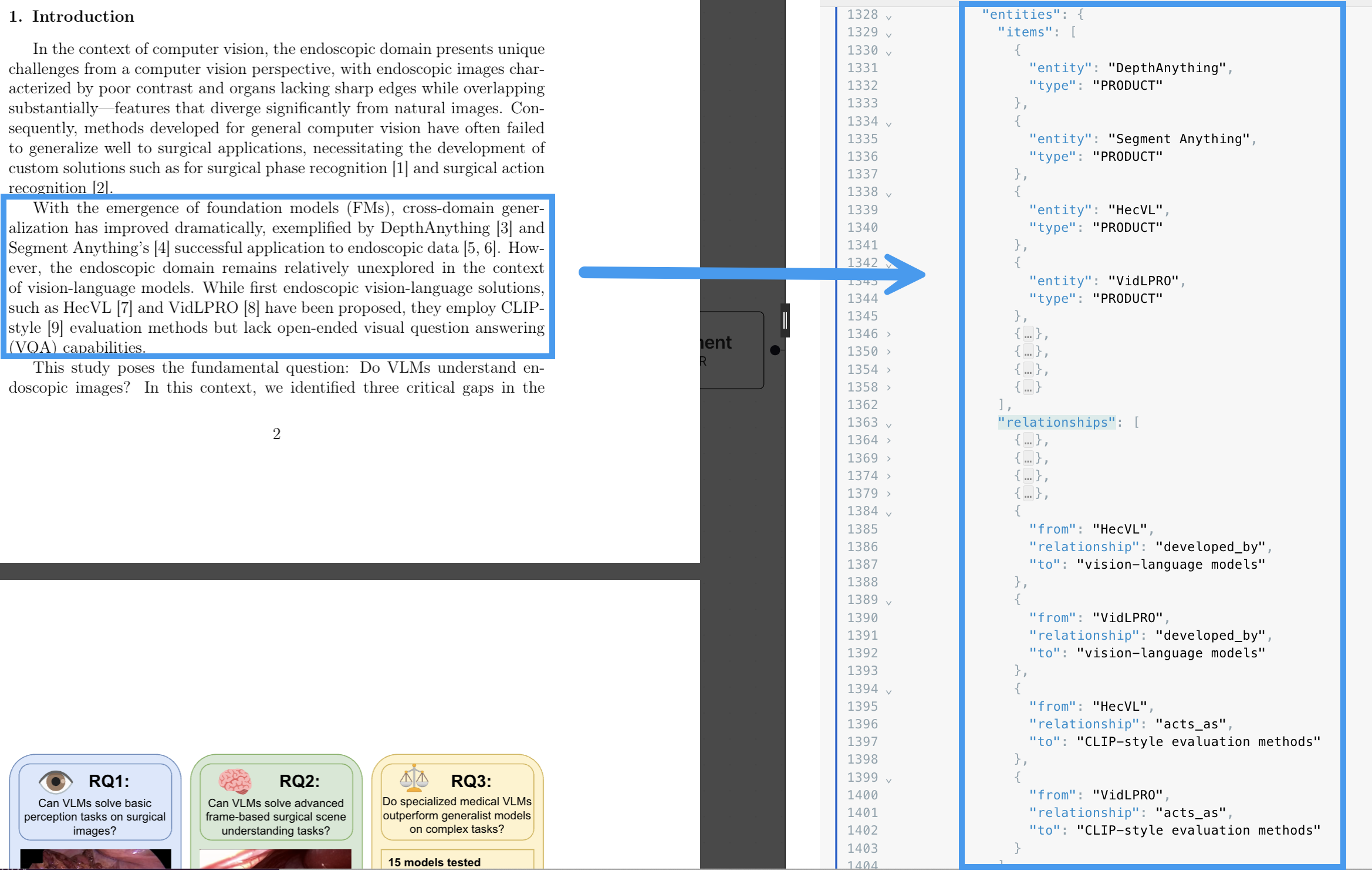
Here is an example of a list of recognized entities and their entity types, along with a list of relationships between those
entities and their relationship types, using GPT-4o. Note specifically the
entities field that is added to the metadata field.
PERSONORGANIZATIONLOCATIONDATETIMEEVENTMONEYPERCENTFACILITYPRODUCTROLEDOCUMENTDATASET
PERSON-ORGANIZATION:works_for,affiliated_with,foundedPERSON-LOCATION:born_in,lives_in,traveled_toORGANIZATION-LOCATION:based_in,has_office_in- Entity -
DATE:occurred_on,founded_on,died_on,published_in PERSON-PERSON:married_to,parent_of,colleague_ofPRODUCT-ORGANIZATION:developed_by,owned_byEVENT-LOCATION:held_in,occurred_in- Entity -
ROLE:has_title,acts_as,has_role DATASET-PERSON:mentionsDATASET-DOCUMENT:located_inPERSON-DATASET:publishedDOCUMENT-DOCUMENT:referenced_in,containsDOCUMENT-DATE:datedPERSON-DOCUMENT:published
Generate a list of entities and their relationships
To have Unstructured generate list of entities and their relationships, do the following:- For Unstructured Pipelines users, add an Enrichment node of type Image Description to an Unstructured custom workflow.
- For Unstructured API users, add a Named Entity Recognition (NER) task. You add this task
as either as an object in a
workflow_nodesarray (for curl) or as aWorkflowNodein aWorkflowNodescollection (for Python). This object or collection applies whenever you create a workflow, update a workflow, or create a workflow job that processes local files.